
Jeff Mitchell (Infocus) and Chris Willaton (Akambo) talk about the implementation and resourcing of a portfolio management capability both within and outside of an advice business
Over the past two decades, the professionalisation of the portfolio management process has been central to the development of managed accounts. It’s not surprising, therefore, that advice firms have increasingly wanted to be closer to that process.
Infocus and Akambo are two good examples of companies with portfolio management businesses that are closely associated with, and have grown out of, advice organisations.
Jeff Mitchell — Chief Investment Officer at Infocus — believes Infocus is the ‘new model’ of a financial services business, operating an end-to-end integrated wealth platform, which is advice-led, client-focused, and with investment management capability. Jeff says Infocus’ wealth platform is dedicated to empowering financial advice professionals with the independence, infrastructure, and support they need to successfully deliver financial advice.
“At Infocus, our investment management business is called Alpha Investment Management, where we run managed accounts and managed funds for clients ranging from the mass market through to high-net-worth. We currently run our products across six platforms, so we get good crossover between diversified portfolios on the managed funds side, which feeds into diversified portfolios for managed accounts,” says Jeff.

By Jayson Forrest
Chris Willaton
Chief Investment Officer
Akambo
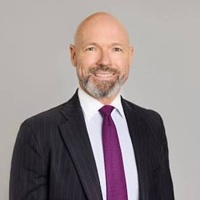
Jeff Mitchell
Chief Investment Officer
Infocus
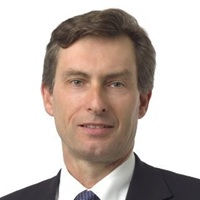
Toby Potter
Chair
IMAP

Continued.....
Chris Willaton — Chief Investment Officer at Akambo — joined Jeff on a panel discussion on the topic ‘Portfolio management through the advice lens’ at the 2026 IMAP Portfolio Management Conference in Melbourne. Akambo is a dedicated asset management business that was born out of advice, with all of its founders being advisers. The business, which provides investment management services, has a strong pedigree in advice, with a deep understanding of the issues and challenges facing advisers. Today, Akambo designs, manages and governs investment portfolios, mainly through managed accounts, including SMAs and MDAs.
Vertex Investment Services is Akambo’s affiliated consulting partner. Vertex is responsible for building Akambo’s philosophy and framework around investment solutions. It also works closely with other investment managers to build appropriate investment solutions.
“This approach to investment management has ensured Akambo has a solid track record of providing an end-to-end solution — from the construction of investment philosophy and frameworks, through to robust and scaleable management and implementation of investment solutions, which are well governed,” says Chris.
The Alpha team has considerable experience, so when it comes to fundamental analysis on other strategies, or looking into the governance structures around whatever we might be using, like ETFs or managed funds, the team does as much of that as it can in-house with the available data. However, if you’re not getting it right with the data, then the performance won’t come through. So, we’re always checking our processes, including ensuring the process running is compliant and producing the returns we expect it to
Scale and resourcing is critical
For Jeff, scale is key when developing and resourcing a portfolio management business. The team at Alpha comprises seven professionals, including an external asset consultant.
“We’re actually running managed funds globally, so it’s not fund-of-funds. We select the underlying securities that go into building our managed funds, which means we have a very quantitative driven process. Essentially, we have a structure/framework for our capital markets, with our processes rolling through that chassis, and with products coming off it,” says Jeff.
“The Alpha team has considerable experience, so when it comes to fundamental analysis on other strategies, or looking into the governance structures around whatever we might be using, like ETFs or managed funds, the team does as much of that as it can in-house with the available data. However, if you’re not getting it right with the data, then the performance won’t come through. So, we’re always checking our processes, including ensuring the process running is compliant and producing the returns we expect it to.”
According to Jeff, this means utilising all the resources within the business to support internal processes. However, he acknowledges that resourcing is a significant challenge for any business, requiring the right blend of people and processes.
Another important part of resourcing is technology. Jeff says harnessing and integrating the right type of technology is essential. As an example, he points to the massive growth in artificial intelligence (AI) over recent years, which is already being incorporated into Infocus and Alpha.
“It’s essential to not only have the right people, but also to have the right technology and importantly, to be able to use that technology correctly. In addition, always have extra resourcing capacity available to enable the business to pivot if something new or unexpected happens, just like we have done with AI. The resources within a business is something you’re always looking at, because every day brings a new challenge,” says Jeff.
Akambo has a similar approach to resourcing for its asset management business. The investment team is made up of 15 people, including 10 portfolio managers. Chris believes the team brings a strong institutional-grade framework to Akambo’s investment solutions.
“One of the great things about Akambo is the long tenure many of our people have in the business and within the industry,” he says. “Of those 10 portfolio managers, there is an average of over 30 years’ industry experience, and most of us also have an advice background. So, we have a strong understanding of the challenges involved in providing advice and advice solutions.”
It was about nine months ago when Akambo first identified the opportunity of using AI within the business, particularly in relation to providing genuine productive solutions and enhancing the organisation’s scaleability. Chris says using an AI solution, like Claude, has streamlined and changed many processes within the business. This has brought greater robustness to Akambo’s investment rigour.
“Claude has added strength and depth to our processes, which would be the equivalent of adding several new investment managers to the team. It has also enabled us to build some stronger risk management systems. Our data interrogation and data collection has been a lot stronger as a result of these AI solutions. This has really propelled us forward over the last eight months.”
Claude has added strength and depth to our processes, which would be the equivalent of adding several new investment managers to the team. It has also enabled us to build some stronger risk management systems. Our data interrogation and data collection has been a lot stronger as a result of these AI solutions. This has really propelled us forward over the last eight months.”
It’s essential to not only have the right people, but also to have the right technology and importantly, to be able to use that technology correctly. In addition, always have extra resourcing capacity available to enable the business to pivot if something new or unexpected happens, just like we have done with AI. The resources within a business is something you’re always looking at, because every day brings a new challenge
Managing conflicts
Looking at the managed accounts market, Jeff believes this structure has reached critical mass. He says within the last three years, managed accounts have largely become mainstream for advisers of mass affluent clients in the retail market, as they recognise the efficiencies of using managed accounts.
Chris agrees the growth in managed accounts over the last two decades has been exponential, with IMAP reporting funds under management totalling $292.9 billion as at 31 December 2025. And while SMAs have driven much of this growth, Chris is confident that MDAs will be the next phase in the evolutionary development of managed accounts. He attributes this to growing interest from advisers and clients for greater customisation and flexibility of managed accounts, which the MDA structure is ideally positioned to do.
However, this rapid growth of the managed accounts sector has attracted the interest of ASIC, as it seeks to better understand potential risks to retail investors using this structure. The regulator is already in the process of examining the managed accounts sector (specifically SMAs), where its primary focus in 2025-26 is to conduct surveillance on licensees and advisers to ensure compliance, proper governance, and good consumer outcomes.
Chris is not surprised by this scrutiny, saying there has been a breakdown in trust with rating houses and platforms in relation to investment due diligence. He cites the recent First Guardian and Shield collapse as a prime example. According to Chris, this collapse has reinforced the need for greater accountability for the role each party plays in the investment process to ensure all bases are covered and each party is doing their respective job correctly.
“As a result, compliance standards, regulatory scrutiny, and the expectations from platforms have all lifted significantly,” says Chris. “This is driving up the cost of compliance, but it’s also happening at a time when there is more pressure on fees. This feeds into the importance of scale. So, when platforms are asking for institutional-grade investment solutions, you need to be able to have scale in order to provide that.”
Jeff agrees, adding that managing conflicts is a fundamental part of the advice and investment process. The main conflict Jeff is most concerned about with managed accounts is centred around conflicted remuneration in the advice process. To deal with any conflicts around conflicted remuneration, Jeff says it’s essential to keep the lines of remuneration clear, and to ensure that when money is moved about, there is actually a service being provided to justify the transfer of funds.
“For us, it’s about making sure that when the client is paying, they are actually getting value for what they’re paying for. We want to ensure that the adviser’s remuneration is for advice and advice-related services,” says Jeff.
According to Chris, there has always been conflicts in the industry and most probably there always will be. The challenge is to identify and manage those conflicts. He believes one of the biggest conflicts has been the blurring of roles for an adviser, where often they assume many roles, including: relationship manager, investment strategist, personal advice strategist, and fund selector. He believes there is considerable conflict in taking on so many different roles.
“At Akambo, we see our role as taking away that conflict by creating a clearer demarkation of roles between who is providing the advice and who is doing the investments, whilst having all parties measured and appropriate governance frameworks in place,” he says.
“As a business, we’re held to account by advisers, clients, platforms, the regulator, and by other parties we deal with. We have internal performance standards that we must uphold. So, when managing conflicts, we seek to tick all the boxes from a professional, governance and regulatory perspective, while making sure we’re adhering to the standards required by platforms. We also ensure we’re clear on our role and the role of the adviser in the advice and investment process.”
We pride ourselves on having long-term relationships, which is a measure of success for us. If we’re able to help advice groups and advisers by removing key person risk, bring greater simplicity to their business, help them with scaleable solutions, and assist with a business’s commercial sustainability, then that’s success
Managing conflicts
Ask Jeff what success looks like for Infocus, and he will tell you it’s being able to maintain and lead the client advice experience. The business does this by focusing on the delivery of quality and cogent advice, coupled with superior investment solutions.
“We live in an ever-changing world. That means what the standards are today, is not what the standards will be in two or three years. You only have to look back three years ago and compare how much different the standards are today. The younger generation of clients are demanding more immediate reporting, better transparency, better engagement with the overall investment process, and a more direct experience with their adviser. The standards of what is expected is only increasing,” says Jeff.
“So, success for Infocus is leading the client experience, and being part of the industry’s thought leadership that takes advice and investing to the next level.”
And for Chris, success is much simpler: “It’s having happy advisers and clients.”
He adds: “We pride ourselves on having long-term relationships, which is a measure of success for us. If we’re able to help advice groups and advisers by removing key person risk, bring greater simplicity to their business, help them with scaleable solutions, and assist with a business’s commercial sustainability, then that’s success.”
About
Jeff Mitchell is Chief Investment Officer at Infocus; and Chris Willaton is Chief Investment Officer at Akambo.
They spoke on the topic ‘Portfolio management through the lens’ at the 2026 IMAP Portfolio Management Conference in Melbourne.
The session was moderated by Toby Potter — Chair of IMAP.